Orbán is gone. What happens now?
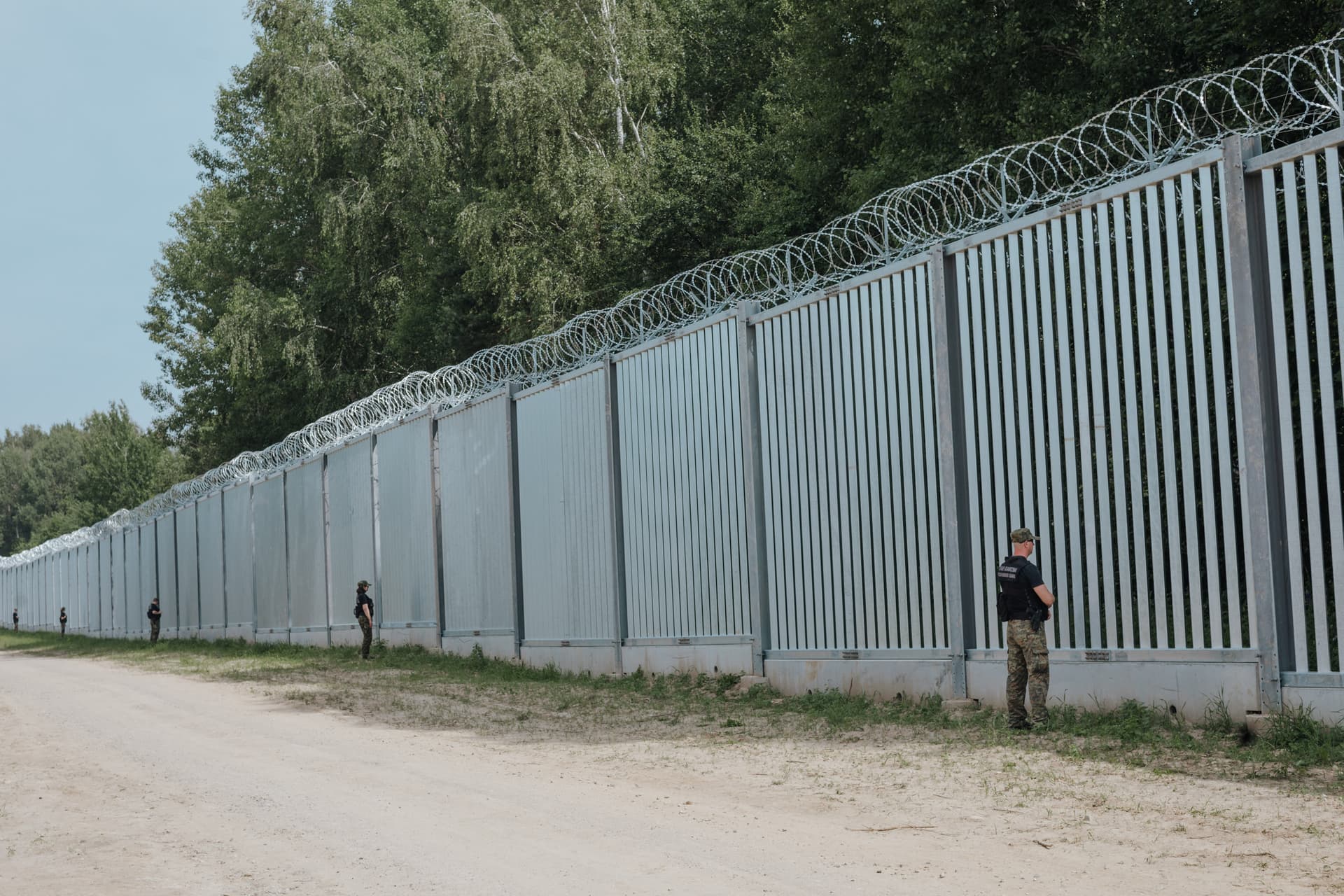
Viktor Orbán, the architect of Europe’s first self-proclaimed "illiberal democracy" and the continent’s longest-serving prime minister, has been voted out of office. After 16 years of the Fidesz party’s dominant, increasingly centralized rule, Hungarian voters have handed the mandate to Péter Magyar and the Tisza (Respect and Freedom) Party. The sheer velocity of Tisza’s ris, from a nascent political movement following the 2024 European elections to the governing power in 2026, is unprecedented in modern European history. Unlike the outgoing government, which has largely eschewed formal, written manifestos since 2010 in favor of emotive slogans, the Tisza Party steps into power armed with a 240-page, data-driven master plan. Titled “Foundations of a Functioning and Humane Hungary” and augmented by the decade-spanning “St. Stephen Program,” the new government’s blueprint is a staggering reversal of the Orbán era. It blends Scandinavian welfare models, rigorous market-economy principles, and an unequivocal return to the European geopolitical fold. Here is what the post-Orbán era will look like. Note: This article will be updated once the final results are in. At the time of writing, Tisza comfortably sits above the 2/3 majority threshhold. 1. De-Orbánizing the State For a decade and a half, Orbán’s "System of National Cooperation" (NER) blurred the lines between state and ruling party, resulting in the freezing of billions in EU cohesion and recovery funds over severe rule-of-law and corruption concerns. Tisza’s immediate priority is dismantling this apparatus. The most aggressive tool in the new government’s arsenal will be the National Asset Recovery and Protection Office (NVVH) . Acting as a super-authority, the NVVH is mandated to conduct 20-year retroactive wealth probes into political decision-makers, their relatives, and oligarchs enriched by state contracts. The program explicitly targets symbolic bastions of the Orbán era, including the Orbán family’s Hatvanpuszta estate and the opaque foundation networks of the National Bank of Hungary. Given the previously blatant levels of corruption in Hungary, it will be interesting to see whether Tisza manages to reform this system from within. To guarantee external oversight and restore Brussels' trust, Hungary will immediately join the European Public Prosecutor’s Office (EPPO) . Furthermore, the new government plans to institutionalize democratic guardrails to prevent future autocratic backsliding. This includes a strict two-term (8-year) limit for the Prime Minister , the immediate depoliticization of public media, the dissolution of the controversial "Sovereignty Protection Office," and the historic opening of communist-era secret police files—a move delayed for 35 years. While not quite on the same level of depravity, the Hungarian situation does evoke parallels to the corruption challenge Xi faced in China starting in the early 2010s. 2. Economic Pivot The outgoing government’s economic model relied heavily on a weak currency, suppressed wages, and importing Asian battery plants through massive state subsidies. The Tisza Party aims to pivot Hungary toward a high-value, knowledge-based economy. Additionally, the new administration plans a radical overhaul of the tax system to shift the burden from the working class to the ultra-wealthy. Key measures include: Taxing the Ultra-Rich: A 1% wealth tax on net assets exceeding 1 billion HUF (approx. €2.5 million), utilizing a comprehensive calculation that includes assets hidden in private foundations, luxury vehicles, and yachts. As you can tell from the types of assets mentioned here, this won't affect 99 % of the Hungarian population. Relief for the Working Class: Reducing the tax burden on the minimum wage from 15% to 9%, keeping an extra 240,000 HUF (approx. €600) per year in the pockets of the lowest earners. Middle-income earners below the median wage will also see targeted tax credits. Reviving SMEs (Small to Medium Enterprises) : Bringing back a simplified tax system for small businesses and reducing bureaucratic red tape by half. VAT Cuts: Minimizing the VAT to 0% on prescription drugs, and to 5% on healthy foods and firewood. To finance this, the government is banking on two major revenue streams: the recovery of pilfered state assets via the NVVH mentioned above, and the unlocking of the frozen EU funds. Furthermore, the Tisza Party has committed to meeting the Maastricht criteria by 2030, putting Hungary on a definitive, target-dated path to adopting the Euro . 3. Rebuilding the Welfare State Hungary is facing a severe demographic crisis, with life expectancy and healthy life years lagging far behind EU averages. Tisza’s "St. Stephen Program" treats human capital not as an expense, but as a strategic investment. Healthcare and Education , long relegated to sub-departments within the Ministry of Interior ( yes, that is indeed strange ), will once again have their own dedicated ministries. Healthcare: The government will inject an immediate 500 billion HUF annually into the public health sector, aiming to reach spending levels of 7% of GDP by 2030. They pledge to cut hospital waiting lists to a maximum of six months for inpatient care and two months for outpatient care by 2027, with a strategic goal to raise national life expectancy to 80 years by 2035. Education: The government promises an immediate 25% wage hike for educational support staff. Crucially, they will abolish the so-called "KEKVA" model—the private foundation system into which Orbán transferred most Hungarian universities. Restoring academic autonomy is not merely an ideological move; it is the prerequisite for the EU to readmit Hungarian students and researchers into the Erasmus+ and Horizon Europe programs . To reverse the brain drain, the government is launching the “Vár a hazád!” (Your Homeland Awaits) program, offering housing, tax incentives, and streamlined bureaucracy to lure back 200,000 of the roughly 700,000 Hungarians who emigrated to Western Europe over the last decade. Furthermore, the "100% Family" initiative will double the long-frozen family allowance and introduce a "Male 40" retirement option to protect men in grueling physical jobs. 4. Europe is Back Perhaps the most globally consequential shift will be Hungary's foreign policy. The era of the "peacock dance", Orbán’s balancing act between the EU, the US, Moscow and Beijing, is officially over. The Tisza manifesto is unequivocal: Hungary’s place is in the West (note that this is the manifesto's phrasing, whereas we don't like to use terms as imprecise as West or East ) . The government will revitalize the Visegrád Four (V4) alliance and rebuild the historic Polish-Hungarian partnership. Domestically, they have passed a mandate to eliminate Hungary's energy dependence on Russia by 2035, pairing it with an ambitious goal to double renewable energy output by 2040. Renewables are important to European strategic sovereignty. The new government vows not to send Hungarian troops into the Russia-Ukraine war, maintaining a pro-peace stance but strictly within the framework of NATO obligations. On migration , the new government walks a nuanced, pragmatic line. They will maintain the physical fence on the southern border and reject mandatory EU resettlement quotas, emphasizing a no-tolerance policy for human smuggling. However, they will dramatically reverse Orbán's recent labor policies: as of June 1, 2026, the mass importation of non-EU guest workers, brought in to staff Chinese and South Korean battery plants, will be legally suspended to protect domestic wages and social cohesion. Take a look at this article to understand the EU's new conservative migration policy in detail. Our view This section will be updated later, once we know the final seat distribution.